Explore the stadium structural-analysis workflow using STAAD.Pro, SAP2000 and related finite-element tools, including dynamic loading, deformation contours and modal response checks.
Dynamic loading, human interaction, wind and earthquake deformation analysis for a stadium structure.
A SAP2000 workflow for designing and analysing a stadium under static and dynamic actions, including crowd-induced vibration, live load, wind and earthquake effects.
Discuss Your Stadium Project
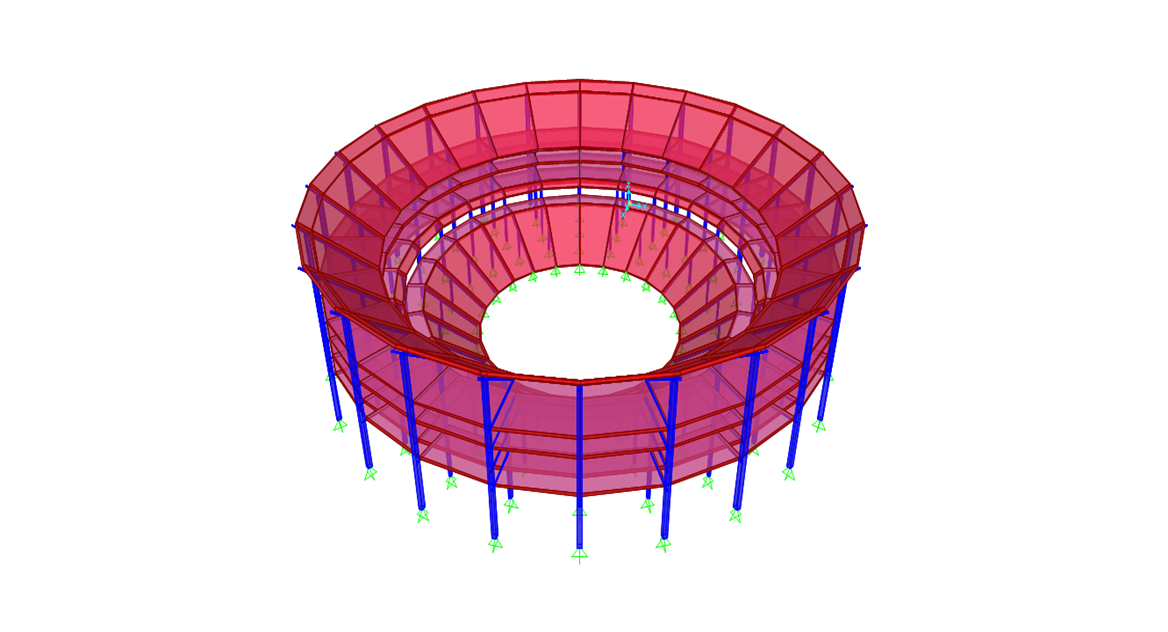
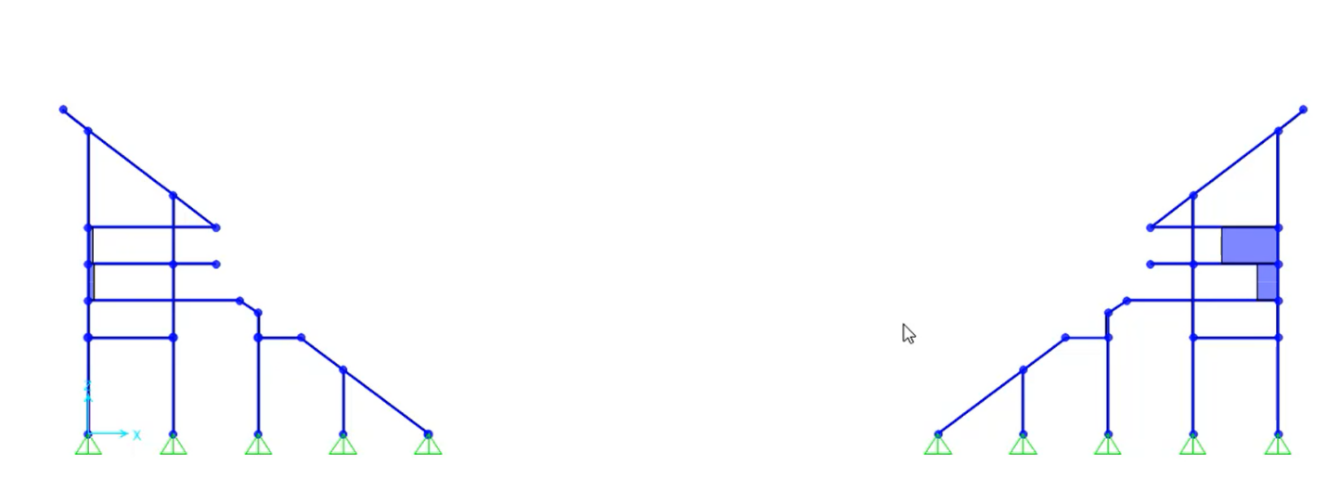
The structural form is defined using an XZ cross-section for the stadium seating tiers and support frames, establishing the vertical load path for stands, slabs and columns.
The XY plan arranges the radial column grid around the stadium bowl, allowing the SAP2000 model to distribute gravity, crowd and lateral loads through the support system.
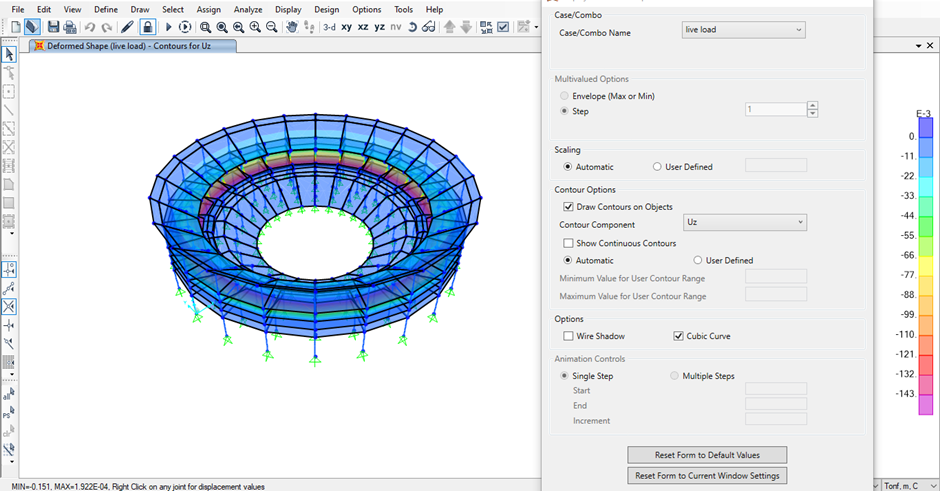
The stadium is analysed under live-load conditions to identify maximum vertical displacement and check serviceability behaviour of the seating and slab regions.
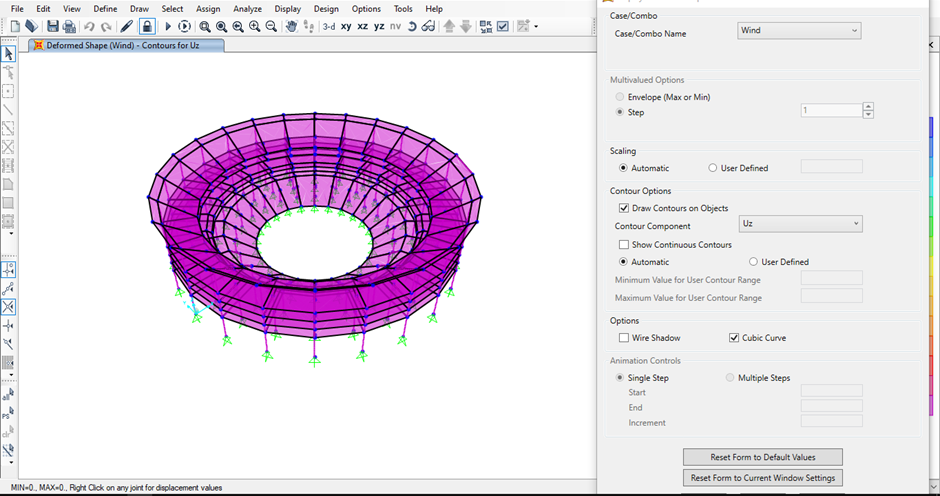
Wind and seismic load cases are compared to understand the stadium’s lateral stability and to locate the most critical deformation regions around the bowl.
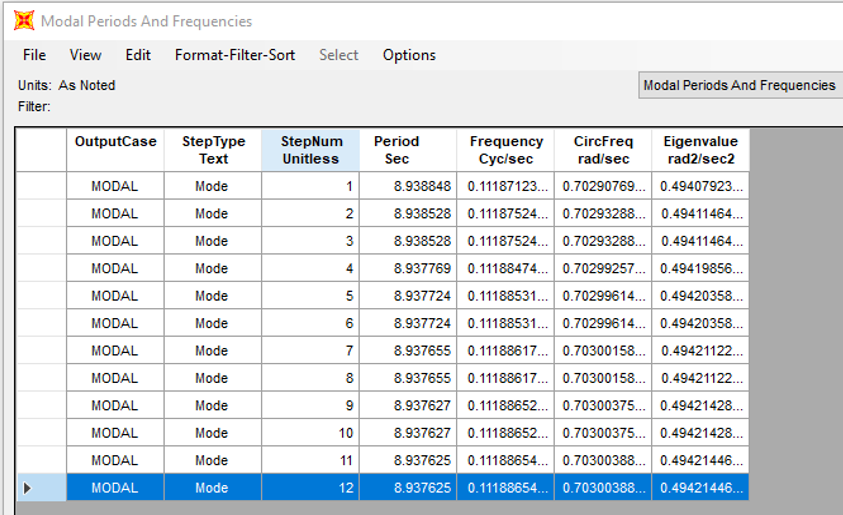
The final stage reviews modal period and frequency values to assess vibration behaviour and support the design checks for human-structure interaction.